
If you own a website — or plan to build one — hosting is not optional. Every website on the internet requires hosting in order to exist, load, and stay accessible to visitors.
It is one of the few unavoidable recurring costs tied to running a website, alongside a domain name. Yet for many businesses, website hosting is still one of the least understood parts of the process.
At Flexify Labs, we believe businesses should understand exactly what they are paying for, why they are paying for it, and how to avoid unnecessary long-term platform costs. That starts with understanding hosting.
What Is Website Hosting?
Website hosting is the service that stores your website’s files and makes them accessible online.
Every image, page, blog post, product listing, and piece of code on your website lives on a server somewhere. Hosting providers supply and maintain those servers so your website can load when someone visits your domain.
Without hosting, a website simply cannot exist publicly on the internet.
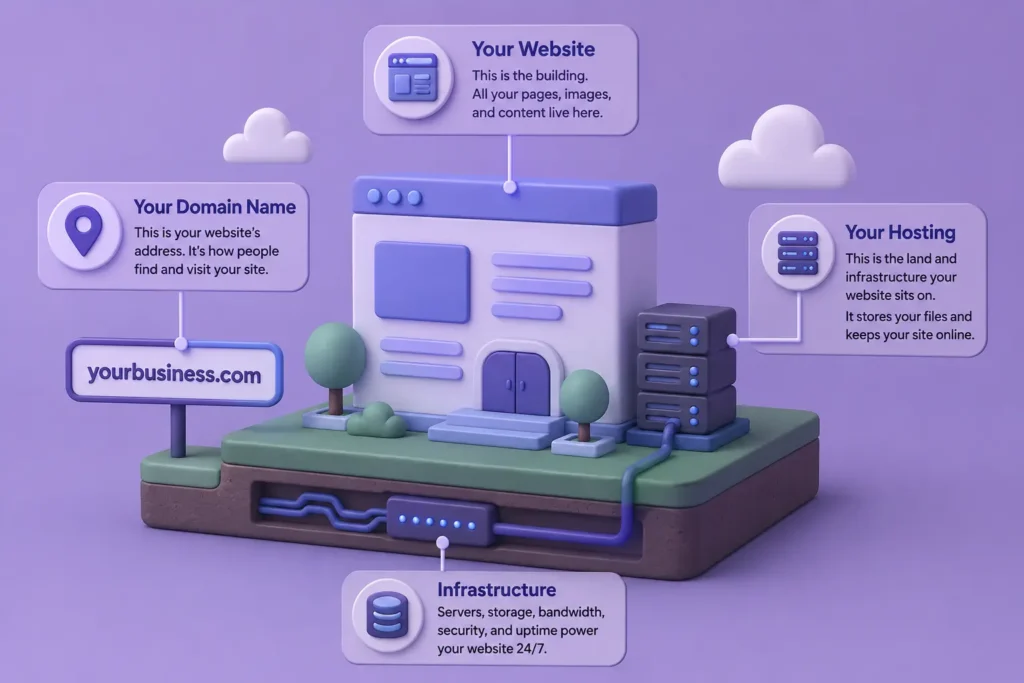
Think of it like this:
- Your domain name is your website’s address
- Your website itself is the building
- Hosting is the land and infrastructure the building sits on
No hosting means nowhere for the website to live.
Why Hosting Is Unavoidable
Many modern website platforms blur hosting into monthly subscriptions, making it feel invisible. But even then, you are still paying for hosting — it is simply bundled into the platform pricing.
Whether a website is built on:
- WordPress
- Squarespace
- Wix
- Shopify
- Framer
…hosting costs still exist behind the scenes.
The difference is how transparent and flexible those costs are.
Some platforms package hosting into higher recurring subscriptions with limited customization or ownership. Others — particularly custom WordPress websites — allow businesses to separate hosting from the website itself, which often leads to significantly lower long-term operating costs.
What Hosting Actually Covers
A quality hosting plan typically includes:
- Server space for your website files
- Bandwidth for visitor traffic
- Website security protections
- SSL certificates (HTTPS security)
- Website backups
- Performance optimization
- Uptime monitoring
- Database management
- Email or DNS integration
- Technical infrastructure maintenance
Better hosting generally results in:
- Faster website speeds
- Better mobile performance
- Improved SEO performance
- Higher reliability
- Stronger security
- Better scalability as traffic grows
Cheap hosting can technically keep a site online, but poor infrastructure often creates slow load times, downtime, plugin conflicts, and frustrating reliability issues.
Average Website Hosting Costs
Hosting costs can vary substantially depending on the type of hosting environment, performance requirements, and whether hosting is bundled into a broader website platform subscription.
One important distinction is that many popular website builders include hosting inside their monthly platform pricing. So while businesses may think they are only paying for a “website builder,” part of that recurring subscription is still covering hosting infrastructure behind the scenes.
Here is a more accurate breakdown of common annual website hosting costs:
| Hosting Type | Average Annual Cost |
|---|---|
| Basic Shared Hosting | $30–$120/year |
| Managed WordPress Hosting | $150–$500+/year |
| VPS or Cloud Hosting | $200–$1,000+/year |
| Dedicated Enterprise Hosting | $1,000+/year |
Meanwhile, website builder platforms that bundle hosting into subscriptions commonly cost:
| Website Builder Platform | Typical Annual Cost (Hosting Included) |
|---|---|
| Squarespace | ~$192–$480+/year |
| Wix | ~$204–$588+/year |
| Shopify | ~$348–$3,000+/year |
| Framer | ~$180–$900+/year |
These bundled platform costs often increase further when:
- Ecommerce functionality is added
- Advanced SEO tools are needed
- More bandwidth or storage is required
- Premium plugins or apps are installed
- Additional contributors or admin accounts are added
This is why separating true hosting costs from platform subscription pricing matters when evaluating the long-term cost of a website.
The Hidden Cost Problem With Many Website Builders
One of the biggest misconceptions in web development is that website builders are always “cheaper.”
In reality, many businesses end up paying substantially more over time through:
- Monthly subscriptions
- Locked ecosystems
- Transaction fees
- Premium feature upgrades
- App marketplace costs
- Limited portability
A platform that starts at $20–$40/month can easily exceed several hundred dollars annually before accounting for domains, plugins, or ecommerce functionality.
And if you ever want to migrate away from the platform later, rebuilding the site entirely is often required.
How Flexify Labs Approaches Hosting
At Flexify Labs, we build custom WordPress websites designed around long-term flexibility and ownership.
For most standard business websites, our hosting setup typically costs around:
$45–$55 Per Year
That includes:
- Reliable hosting infrastructure
- SSL security
- Strong performance foundations
- Full WordPress flexibility
- Scalable growth potential
- Lower long-term operating costs
This allows businesses to avoid inflated recurring platform subscriptions while still maintaining a professional, modern website.
The goal is not simply to make websites cheaper upfront — it is to reduce unnecessary long-term overhead while giving businesses more control over their online presence.
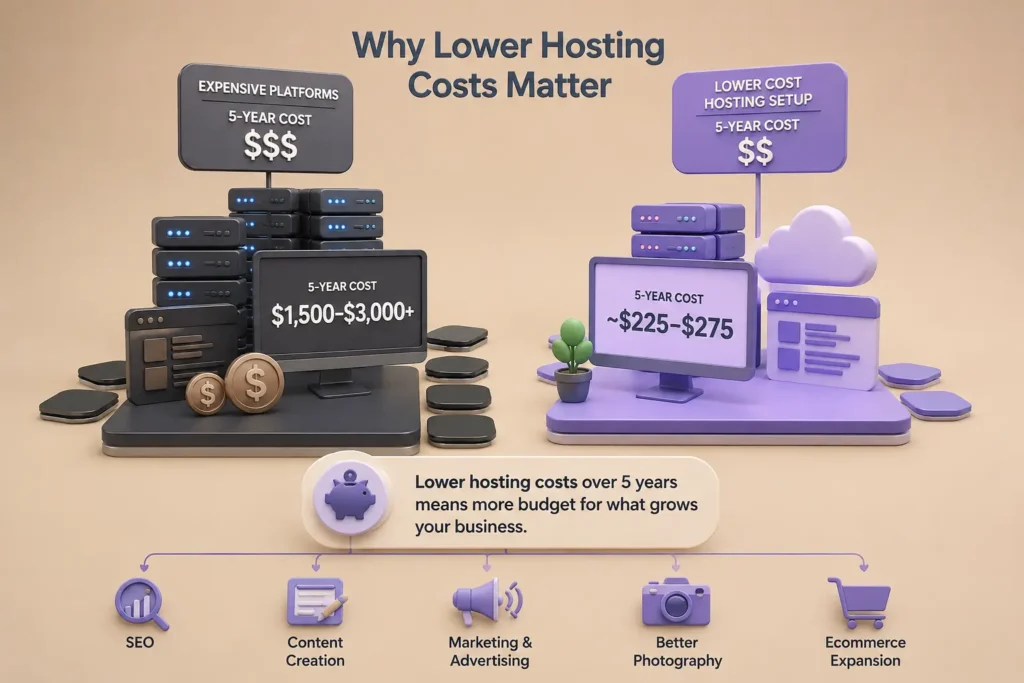
Why Lower Hosting Costs Matter
Reducing recurring website expenses may not sound exciting initially, but over multiple years, the savings become substantial.
For example:
| Platform Type | Estimated 5-Year Hosting/Platform Cost |
|---|---|
| Subscription Builder Platform | $1,500–$3,000+ |
| Flexify Labs Hosting Structure | ~$225–$275 |
That difference can instead be invested into:
- SEO
- Content creation
- Branding
- Advertising
- Better photography
- Ecommerce expansion
- Actual business growth
For small businesses especially, lowering recurring operational costs creates more room to scale strategically.
Hosting and SEO Performance
Hosting also directly impacts search visibility.
Google increasingly prioritizes:
- Fast mobile performance
- Stable page loading
- Secure browsing
- Website reliability
Poor hosting can negatively affect:
- Page speed
- Core Web Vitals
- Crawlability
- User experience
- Conversion rates
Even the best-designed website can struggle if the hosting infrastructure underneath it is weak.
That is why hosting should be viewed as foundational infrastructure — not just another subscription.
Choosing the Right Hosting Setup
The “best” hosting solution depends on:
- Website size
- Traffic expectations
- Ecommerce requirements
- Scalability goals
- Technical flexibility
- Budget priorities
Some businesses genuinely benefit from premium managed hosting. Others are dramatically overpaying for features they do not need.
The key is building around actual business requirements instead of defaulting into expensive ecosystems by convenience alone.
Final Thoughts
Every website requires hosting. There is no way around it.
The real question is whether your hosting structure is:
- Cost-efficient
- Scalable
- Flexible
- Reliable
- Built for long-term ownership
At Flexify Labs, we focus on building custom WordPress websites that balance strong performance with practical long-term costs — helping businesses avoid unnecessary recurring platform expenses while maintaining full control over their website.
A website should function as a long-term business asset, not an endlessly increasing subscription.